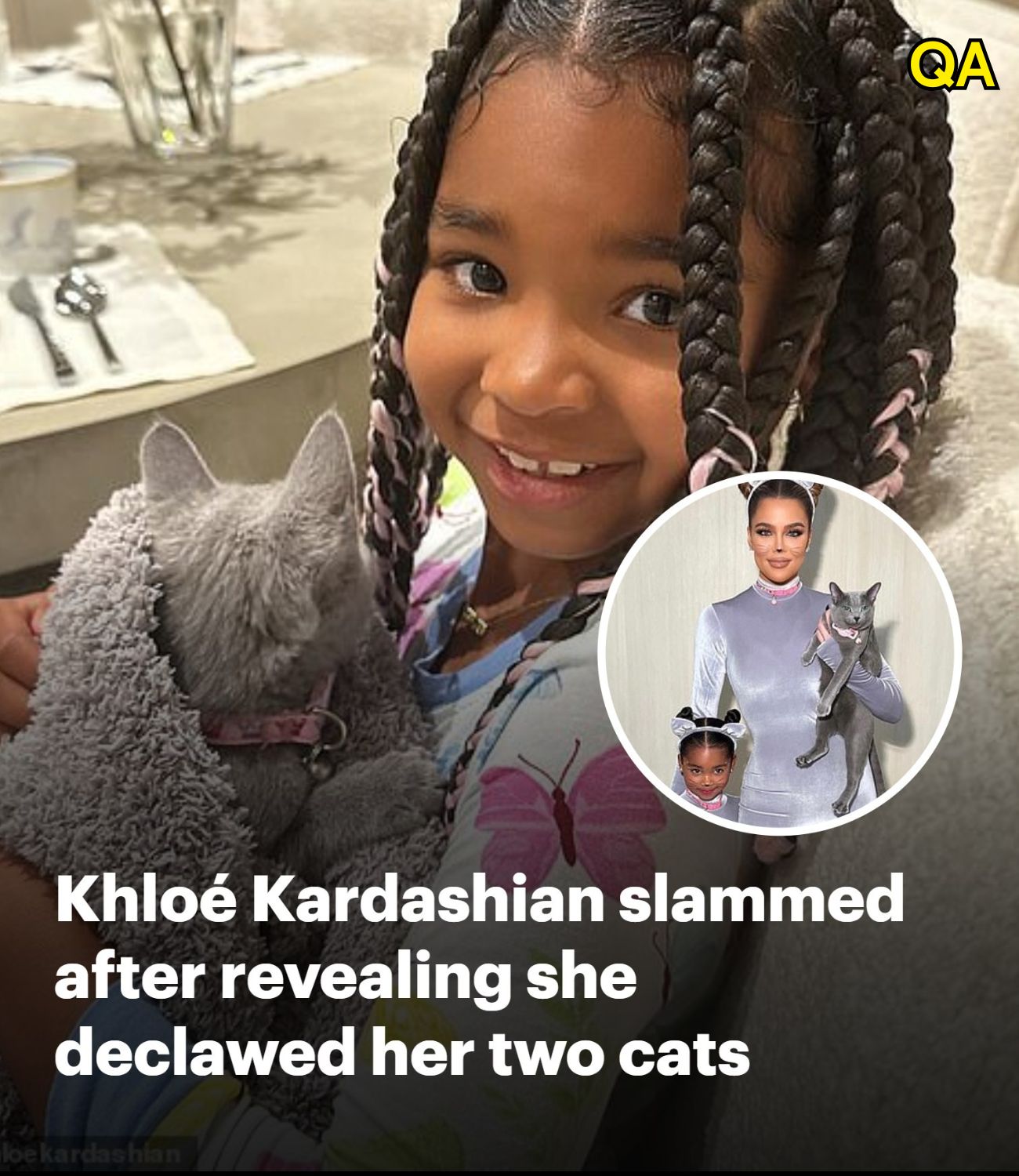
A recent discussion by Khloé Kardashian about her pet cats has reignited a larger public conversation about declawing, animal welfare, and how pet owners make medical decisions for companion animals.
On an episode of her podcast, Kardashian expressed regret over previously having her two Russian Blue cats declawed, admitting she now feels the decision may have negatively affected their well-being. Her comments quickly spread online and prompted strong reactions from animal welfare organizations, veterinarians, and social media users.
The controversy reflects a broader shift in public attitudes toward declawing, a procedure that has become increasingly debated in recent years as more veterinarians and advocacy groups raise concerns about its long-term effects on cats.
What Is Declawing?
Declawing is a surgical procedure that removes a cat’s claws so they do not grow back. Unlike a simple nail trim, the procedure involves removing part of the toe bone connected to the claw.
Veterinary experts explain that cats rely heavily on their claws for natural behaviors such as:
Climbing
Stretching
Balancing
Scratching
Playing
Self-protection
Historically, declawing was sometimes performed to prevent damage to furniture or reduce scratching injuries inside homes. However, many veterinarians and animal welfare organizations now discourage the practice except in limited medical situations.

Why Declawing Has Become So Controversial
Over the last decade, attitudes toward declawing have changed significantly.
Animal welfare groups argue that the procedure can affect a cat’s physical comfort and natural behavior long after surgery. Critics say it may contribute to stress, anxiety, altered walking posture, or behavioral changes in some animals.
Supporters of stricter regulation also point out that declawing is increasingly unnecessary because modern alternatives are widely available, including:
Scratching posts
Behavioral training
Nail trimming
Protective nail caps
Environmental enrichment
Because of these concerns, several countries and regions have introduced restrictions or bans on non-medical declawing procedures.
California’s New Restrictions on Declawing
The renewed attention surrounding Kardashian’s comments also comes shortly after new regulations in California took effect.
According to reports, legislation limiting declawing procedures except for therapeutic medical purposes became effective in early 2026.
Animal welfare advocates view these legal changes as part of a growing international movement toward stronger protections for companion animals.
Several countries, including the United Kingdom and parts of Europe, already restrict or prohibit elective declawing.
Why Cats Scratch in the First Place
Veterinary behavior specialists emphasize that scratching is a completely normal feline behavior.
Cats scratch for several reasons:
Marking territory through scent glands in their paws
Stretching muscles and tendons
Maintaining claw health
Releasing energy or stress
Communicating visually with other animals
Because scratching is instinctive, experts recommend redirecting the behavior rather than attempting to eliminate it entirely.

Modern cat behaviorists often encourage creating stimulating indoor environments where cats can climb, scratch, and explore safely.
Khloé Kardashian’s Public Regret
During her podcast discussion, Kardashian stated she was inexperienced with cat ownership at the time and did not fully understand the procedure before agreeing to it.
She also expressed concern that her cats may now feel more vulnerable because they lack their natural defensive abilities.
Many animal welfare advocates acknowledged that public discussions about regret and education can help raise awareness among other pet owners.
However, critics online argued that pet owners should thoroughly research procedures before making permanent medical decisions for animals.
The public reaction reflects how emotionally invested people have become in discussions surrounding animal welfare and responsible pet ownership.
PETA’s Response and Animal Advocacy
People for the Ethical Treatment of Animals, commonly known as PETA, strongly criticized declawing following Kardashian’s comments.
The organization emphasized that cats should retain their claws and encouraged owners to use humane alternatives instead of surgical procedures.
Animal advocacy groups have spent years campaigning against declawing through public awareness efforts, veterinary outreach, and legislative lobbying.
Supporters of these campaigns argue that increasing public education has already contributed to declining declawing rates in many regions.
The Changing Relationship Between Humans and Pets
The controversy also highlights broader cultural changes in how society views companion animals.
Pets today are often treated as family members rather than simply household animals. This shift has increased public attention toward ethical questions involving grooming, training, breeding, and veterinary care.
Modern pet owners are more likely to research nutrition, emotional enrichment, behavioral science, and animal psychology than previous generations.
As a result, medical procedures once considered routine are now receiving greater ethical scrutiny.
The Role of Social Media in Pet Culture
Social media has transformed pet culture dramatically.
Cats and dogs now appear constantly in online content, influencer accounts, advertisements, and viral videos. Public figures frequently share details about their pets’ lives, which can influence trends in pet care and ownership.
At the same time, social media also intensifies public criticism when controversial animal-related topics emerge.
Online audiences increasingly expect celebrities and influencers to demonstrate awareness of animal welfare issues. This can create rapid backlash when actions are perceived as outdated or harmful.
The Kardashian discussion became part of a much larger digital conversation about education, accountability, and evolving standards of pet care.

Why Russian Blue Cats Are So Popular
Kardashian’s pets are reportedly Russian Blue cats, a breed admired for its silver-blue coat, green eyes, and calm temperament.
Russian Blues are known for being intelligent, gentle, and highly attached to their owners. They are often described as reserved around strangers but affectionate with familiar people.

Because the breed is associated with elegance and beauty, Russian Blues frequently appear in social media and celebrity pet culture.
What Veterinarians Recommend Instead of Declawing
Most modern veterinary organizations recommend alternatives to declawing whenever possible.
Common recommendations include:
Providing multiple scratching surfaces
Using vertical and horizontal scratching posts
Rewarding positive scratching behavior
Regular nail trimming
Interactive play sessions
Soft nail covers for indoor cats
Behavior specialists note that environmental enrichment is especially important for indoor cats because boredom and stress can increase destructive scratching.
The Emotional Side of Pet Ownership
Part of why controversies like this generate strong reactions is because people feel emotionally protective toward animals.
Pet owners often form deep attachments to companion animals and may respond intensely when they perceive unnecessary harm or discomfort.
At the same time, veterinarians emphasize the importance of education rather than simply condemnation. Many owners make decisions based on outdated advice, incomplete information, or recommendations that were once more socially accepted.
As understanding of animal welfare evolves, public attitudes often change as well.
How Veterinary Ethics Have Evolved
Veterinary medicine has changed significantly over recent decades.
Procedures once considered acceptable are now reevaluated through updated research into animal pain, behavior, and psychological well-being.
This evolution mirrors broader changes in medicine and ethics across society. As scientific understanding improves, standards of care often become more refined.
Many veterinary associations now prioritize minimally invasive approaches and behavioral solutions over permanent physical alterations whenever possible.
A Reflection on Compassion, Learning, and Responsibility
The discussion surrounding Khloé Kardashian’s cats ultimately reflects a larger cultural shift in how humans think about animals and responsibility.
As people become more informed about animal behavior and welfare, there is growing recognition that pets have complex physical and emotional needs extending beyond basic care.
The controversy also highlights the importance of education. Many practices once viewed as ordinary are now reconsidered through the lens of modern veterinary science and evolving ethical standards.
For many pet owners, stories like this serve as reminders that caring for animals involves continual learning. Mistakes, misunderstandings, and outdated advice can happen, but increased awareness may help future owners make more informed choices.
In the end, the conversation is not only about one celebrity or one procedure. It reflects humanity’s ongoing effort to better understand the animals that share our homes and depend on us for their well-being.