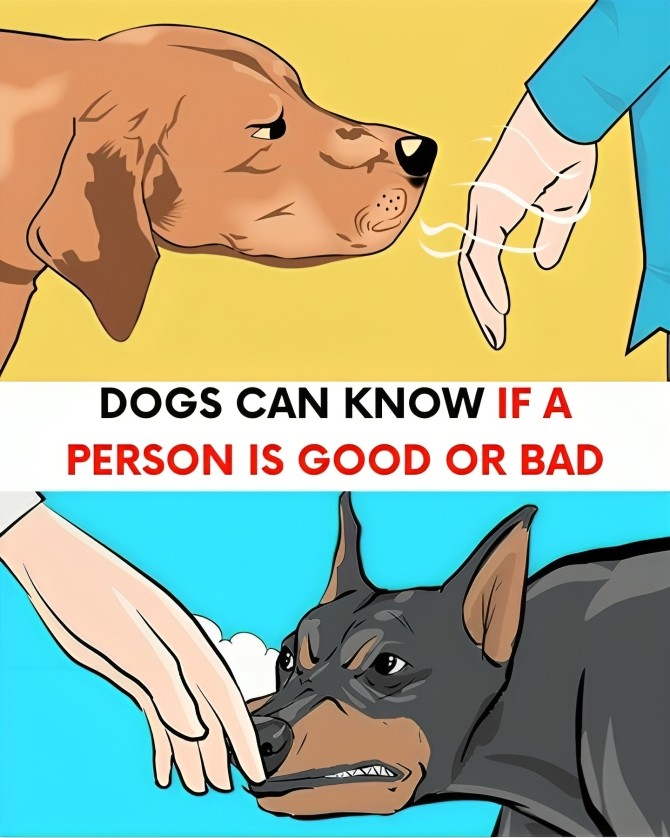
Almost every dog owner has experienced it at least once.
A friendly visitor enters the house, yet the family dog suddenly becomes cautious and distant. Another stranger arrives moments later, and the same dog responds with excitement and trust almost instantly.
These moments often leave people wondering whether dogs possess some mysterious ability to judge human character. For centuries, stories have suggested that dogs can sense dishonesty, fear, kindness, or even hidden emotions long before humans notice them.
Modern science is now beginning to explore these fascinating claims more seriously.
Researchers studying canine behavior have discovered that dogs are far more socially intelligent than many people once believed. They observe human actions carefully, react to emotional cues, and even make decisions based on trust and past experiences.
This article explores the growing scientific understanding of canine perception, the cultural myths surrounding dogs and intuition, and why humans continue believing dogs may be among the best judges of character in the animal world.

The Ancient Bond Between Humans and Dogs
The relationship between humans and dogs stretches back thousands of years.
Archaeologists believe dogs were among the first animals domesticated by humans. Early wolves likely formed cooperative relationships with human communities, gradually evolving into the dogs people know today.
Over centuries, dogs adapted remarkably well to human communication, emotions, and routines. Unlike many animals, dogs became highly skilled at reading human gestures, facial expressions, and vocal tones.
Scientists often describe this relationship as a unique example of co-evolution, where both species influenced each other’s development over time.
Today, dogs remain deeply connected to human emotional lives, which may help explain why people often attribute intuitive abilities to them.
Can Dogs Detect Trustworthiness?
One of the most famous studies involving canine trust came from researchers at Kyoto University.
In the experiment, dogs followed a human pointing toward containers supposedly holding food rewards. Initially, the dogs trusted the human signals and successfully found treats.
However, after being intentionally misled once, many dogs became reluctant to follow the same person’s instructions again, even when food was later present.
Researchers concluded that dogs may evaluate human reliability based on previous interactions.
This finding surprised many scientists because it suggested dogs are not simply responding automatically to commands. Instead, they appear capable of assessing whether a person is dependable.
Behavior specialists describe this as a form of social intelligence shaped through thousands of years living alongside humans.
The Incredible Power of a Dog’s Nose
To understand canine intuition, it helps to remember that dogs experience the world very differently from humans.
While humans rely heavily on vision, dogs rely primarily on smell.
Scientists estimate that a dog’s sense of smell may be tens of thousands of times more sensitive than a human’s. Dogs possess specialized scent receptors capable of detecting extremely subtle chemical changes in the environment.
This extraordinary ability allows dogs to notice things humans cannot easily perceive, including:
Hormonal changes
Stress-related chemicals
Fear responses
Illness-related scent variations
Emotional state changes
Because emotions influence body chemistry, dogs may effectively “smell” emotional changes before humans consciously recognize them.

Can Dogs Smell Stress?
Recent research suggests dogs can indeed detect stress through scent alone.
In studies conducted by researchers connected to University of Bristol and other institutions, dogs were exposed to scent samples collected from humans during stressful situations.
The results suggested dogs reacted differently when exposed to stress-related odors compared to calm human scents.
Researchers observed behavioral changes indicating increased caution and reduced optimism in unfamiliar situations.
Scientists believe this happens because human stress alters body chemistry, releasing compounds detectable through canine olfaction.
In simple terms, dogs may literally smell emotional tension.
Why Dogs React to Human Emotions
Dogs evolved within human social environments for thousands of years. Survival likely depended partly on understanding human moods and intentions accurately.
As a result, dogs became unusually sensitive to:
Voice tone
Facial expressions
Body posture
Movement patterns
Emotional tension
Routine changes
Psychologists studying animal behavior explain that dogs constantly gather information from multiple sensory channels simultaneously.
When people appear nervous, angry, fearful, or calm, dogs may combine visual, auditory, and scent-based information to interpret the situation.
This does not necessarily mean dogs understand morality the same way humans do. Rather, they respond to emotional consistency, behavior patterns, and environmental cues.

Do Dogs Judge Human Behavior?
Another fascinating area of research suggests dogs may observe how humans treat others.
Some studies indicate dogs show less interest in interacting with people behaving rudely or unfairly toward their owners.
This has fueled popular beliefs that dogs can identify “bad” people.
However, animal cognition experts caution against oversimplifying these findings. Dogs are likely responding to emotional tone, tension, and social behavior rather than making moral judgments in a human sense.
Still, the results highlight how closely dogs monitor social interactions around them.
The Cultural Myth of the “Sixth Sense”
Long before scientific studies existed, cultures worldwide believed dogs possessed extraordinary intuition.
In ancient Egypt, dogs were associated with guardianship and spiritual protection. Greek mythology sometimes portrayed dogs as guides between worlds. In parts of Asia and Europe, dogs were believed capable of sensing approaching danger or emotional disturbances.
Folklore often described dogs reacting strangely before storms, earthquakes, or major emotional events.
Modern science explains many of these stories through heightened sensory perception rather than supernatural abilities. Dogs may notice subtle sounds, vibrations, or scent changes humans overlook entirely.
Yet these ancient beliefs continue shaping how people interpret canine behavior today.
Why Humans Trust Dogs Emotionally
People frequently trust dogs’ reactions because dogs appear emotionally honest.
Unlike humans, dogs generally communicate feelings directly through posture, movement, vocalization, and behavior. This openness creates the impression that dogs respond instinctively rather than strategically.
Psychologists suggest humans often project emotional meaning onto dog behavior because it feels sincere and uncomplicated.
When a dog dislikes someone, people may assume the animal senses hidden danger or dishonesty. In reality, the dog could simply be responding to unfamiliar scents, nervous movements, or subtle body language.
Even so, the emotional impact remains powerful.
The Science of Human-Dog Emotional Synchronization
Studies increasingly show that humans and dogs influence each other emotionally.
Researchers have found evidence that dogs’ stress levels may rise alongside stressed owners. Calm human behavior, meanwhile, can help dogs feel safer and more relaxed.
This emotional synchronization partly explains why dogs often seem deeply connected to their owners’ moods.
Veterinarians and trainers emphasize that dogs are highly sensitive to household emotional environments. Loud arguments, anxiety, frustration, or tension may all influence canine behavior.
Likewise, positive emotional energy and calm routines can help dogs feel secure.
Can Dogs Really Sense “Good” and “Bad”?
Scientifically speaking, dogs likely do not evaluate morality using human ethical concepts.
However, they are extremely skilled at detecting emotional consistency, behavioral reliability, tension, fear, and social interactions.
Dogs observe:
How people behave
How humans treat others
Whether actions match expectations
Emotional energy and stress signals
Patterns of trust and familiarity
Because dogs process these signals continuously, their reactions may sometimes appear almost intuitive.
This is why many owners feel their dogs can “read” people remarkably well.
Why These Studies Matter
Understanding canine emotional perception has practical implications beyond curiosity.
Researchers believe these findings may help improve:
Dog training techniques
Animal welfare practices
Therapy dog programs
Service animal training
Human-animal communication
Mental health support involving companion animals
The research also reminds people that dogs are not passive pets simply responding mechanically to commands. They are socially intelligent animals deeply tuned into human behavior and emotional states.
Conclusion
The idea that dogs can sense whether a person is good or bad has fascinated humans for generations. While science does not support supernatural explanations, research increasingly confirms that dogs are remarkably perceptive social observers.
Through powerful senses, emotional awareness, and thousands of years of shared evolution with humans, dogs have developed an extraordinary ability to detect subtle changes in behavior, mood, and trustworthiness.
They may not judge morality in the human sense, but they do notice patterns humans often miss.
Perhaps this is why people continue trusting canine instincts so deeply. Dogs respond honestly, observe carefully, and remain emotionally connected to the humans they love.
In a complex world where human intentions can sometimes feel difficult to read, the steady emotional awareness of a loyal dog still feels almost magical.
Sources
Kyoto University
University of Bristol
American Kennel Club
Kyoto University Research Information