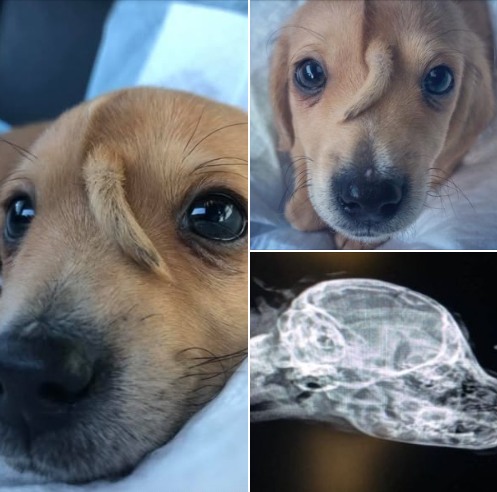
On a freezing day in Missouri, rescuers from a small animal organization spotted a tiny puppy wandering outdoors alongside an older dog. The little pup appeared playful despite the cold, but something unusual immediately caught everyone’s attention.
Growing from the middle of the puppy’s forehead was what looked like a tiny extra tail.
The remarkable appearance made the puppy seem almost mythical, as though he had stepped straight out of a fantasy story. Soon after being rescued, the puppy was given a memorable name: “Narwhal the Little Magical Furry Unicorn.”
Photos and videos of the cheerful dog quickly spread across the internet. Millions of people were fascinated not only by his unusual feature, but also by his joyful personality and resilience.
Yet beyond the viral headlines lies a deeper story involving animal genetics, human compassion, mythology, and the special emotional bond people share with animals.
This article explores the science behind rare physical traits in animals, the cultural fascination with “unicorn” symbolism, and why stories like Narwhal’s resonate so strongly around the world.

The Puppy That Became an Internet Sensation
The puppy was rescued by Mac’s Mission, a rescue group known for helping animals with special medical needs.
According to the organization, the small appendage on Narwhal’s forehead resembled a second tail. Veterinary examinations later suggested that the extra growth was not connected to major structures and did not appear to affect the puppy’s health.
Videos shared online showed Narwhal behaving like any energetic young dog. He played, ran, and interacted happily with caretakers despite his unusual appearance.
The internet quickly embraced him as a symbol of uniqueness and positivity. Supporters praised the rescue organization for highlighting the idea that animals with uncommon appearances deserve love and care just like any other pet.
Why Humans Are Fascinated by Unusual Animals
Throughout history, humans have been deeply drawn to rare or visually unique animals.
Scientists studying human psychology explain that unusual traits naturally capture attention because the brain is wired to notice patterns that differ from the norm. This instinct may have originally helped early humans identify potential opportunities or environmental changes.
Today, that same curiosity often fuels viral fascination with animals displaying rare colors, markings, or physical features.
Social media further amplifies these reactions. Images of distinctive animals spread rapidly because people enjoy sharing stories that feel surprising, emotional, or uplifting.
In Narwhal’s case, the puppy’s appearance combined scientific curiosity with emotional warmth, making the story especially compelling.
The Science Behind Rare Physical Traits
Veterinary experts explain that unusual growths or extra appendages can occasionally occur during embryonic development.
These conditions may result from developmental variations, genetic mutations, or incomplete formation processes while an animal is growing before birth.
In some cases, additional tissue develops without affecting the animal’s overall health. In others, rare physical conditions may require ongoing medical monitoring.
Importantly, veterinarians emphasize that every case is unique. Medical imaging and professional evaluations are necessary to determine whether unusual growths could create complications later in life.
For Narwhal, reports suggested the extra tail did not interfere with his daily activities, which helped reassure supporters following his story online.

The Mythology of Unicorns
One reason Narwhal attracted so much attention is the powerful symbolism associated with unicorns.
Unicorn legends have existed for thousands of years across multiple cultures. Ancient Greek writers described mysterious one-horned creatures believed to possess extraordinary beauty and purity. In medieval Europe, unicorns became symbols of magic, innocence, and rarity.
In Asian mythology, similar creatures sometimes represented wisdom, peace, or spiritual harmony.
Over time, unicorn imagery evolved into a universal symbol of uniqueness and wonder. Modern popular culture continues embracing unicorns in books, films, toys, and internet trends.
By calling Narwhal a “unicorn puppy,” supporters connected the dog’s unusual appearance to these longstanding myths and symbols.
Why Rescue Stories Inspire People
Animal rescue stories often spread widely because they tap into strong emotional themes.
Psychologists suggest that stories involving vulnerable animals can encourage empathy and compassion. When people witness successful rescues or recoveries, they often experience feelings of hope and emotional connection.
In stressful times, uplifting animal stories may also provide emotional relief from negative news cycles. Cute or inspiring animal content frequently becomes popular online because it creates positive emotional reactions.
Narwhal’s story combined several powerful elements:
A vulnerable rescue animal
A rare and visually unusual appearance
A playful and joyful personality
A message celebrating differences
These factors helped transform a local rescue story into a global internet phenomenon.

The Growing Awareness Around Special Needs Pets
In recent years, awareness surrounding animals with disabilities or uncommon conditions has grown significantly.
Animal shelters and rescue groups increasingly highlight pets with special medical or physical needs, encouraging the public to look beyond appearances when considering adoption.
Some animals may require additional care, while others live almost entirely normal lives despite visible differences.
Supporters argue that social media has helped reduce stigma surrounding special needs pets by showing their personalities, resilience, and ability to form loving bonds with humans.
Organizations such as American Society for the Prevention of Cruelty to Animals and Humane Society of the United States continue promoting education about responsible pet care and adoption.
How Social Media Changed Animal Rescue
Before the rise of social media, many rescue organizations struggled to reach large audiences. Today, a single viral story can dramatically increase visibility for shelters and fundraising efforts.
Animal rescue groups often use platforms such as Facebook, Instagram, and TikTok to:
Promote adoption opportunities
Raise awareness about animal welfare
Share recovery stories
Encourage donations
Educate the public about pet care
In Narwhal’s case, viral attention reportedly helped bring awareness not only to him, but also to many other animals cared for by the rescue organization.
This demonstrates how positive internet attention can sometimes create meaningful real-world support for charitable causes.
The Human-Animal Bond
Researchers studying human-animal relationships consistently find that pets can play important emotional roles in people’s lives.
Companion animals may help reduce stress, encourage social interaction, and provide comfort during difficult periods. Dogs especially are known for forming strong emotional connections with humans.
Some scientists believe humans are naturally drawn to animals displaying expressive features or behaviors because they trigger caregiving instincts.
This may partly explain why people responded so warmly to Narwhal’s playful appearance and story of survival.
Even though he looked unusual, his joyful personality reminded viewers of something familiar and emotionally comforting.
Are Rare Animal Traits Becoming More Common?
Experts caution that viral stories can sometimes create the impression that unusual animal conditions are becoming increasingly common.
In reality, rare developmental variations have likely existed throughout history. However, the internet now allows these stories to spread globally within hours.
Veterinarians emphasize the importance of avoiding misinformation or exaggerated claims surrounding rare animal conditions. While some unusual traits appear visually dramatic, they do not automatically indicate supernatural causes or extreme medical danger.
Scientific evaluation remains essential for understanding each individual case accurately.

Why People Celebrate Uniqueness
Narwhal’s popularity also reflects a broader cultural shift toward celebrating individuality and difference.
Modern audiences often connect emotionally with stories that challenge traditional ideas about perfection or normal appearance. Animals with distinctive traits can become symbols of resilience, acceptance, and positivity.
Many supporters viewed Narwhal not as flawed, but as special in a meaningful way.
This perspective aligns with growing conversations around compassion, inclusion, and embracing differences in both animals and humans.
Conclusion
The story of Narwhal the “unicorn puppy” captured global attention because it blended science, mythology, compassion, and curiosity into one unforgettable image.
What began as the rescue of a small puppy wandering through freezing weather soon became a powerful reminder of humanity’s emotional connection to animals and fascination with the unusual.
Scientifically, Narwhal represents a rare developmental condition that appears harmless and manageable. Culturally, he symbolizes something much larger: the enduring human attraction to creatures that seem magical, unique, or extraordinary.
Perhaps the most meaningful part of Narwhal’s story is not the tiny tail on his forehead, but the worldwide response it inspired. Millions of people paused to celebrate kindness, rescue efforts, and the idea that being different can also be something beautiful.
In an internet age often dominated by conflict and negativity, stories like Narwhal’s remind people why compassion still spreads just as quickly as curiosity.
Sources
Mac’s Mission
American Veterinary Medical Association
Humane Society of the United States
Mac’s Mission Official Facebook Page
American Veterinary Medical Association Pet Health Resources